
Blog • Perfecting your Craft, Book Design
Last updated on Apr 22, 2024
60 Literary Devices With Examples: The Ultimate List
Literary devices are perhaps the greatest tools that writers have in literature. Just think — Shakespeare could have written: Everyone has a role in life.
Instead, he used a literary device and penned what is likely the most famous metaphor in literature:
All the world’s a stage
And all the men and women merely players
And the rest is history.
What are literary devices?
A literary device is a writing technique that writers use to express ideas, convey meaning, and highlight important themes in a piece of text. A metaphor, like we mentioned earlier, is a famous example of a literary device.
These devices serve a wide range of purposes in literature. Some might work on an intellectual level, while others have a more emotional effect. They may also work subtly to improve the flow and pacing of your writing. No matter what, if you're looking to inject something special into your prose, literary devices are a great place to start.
How to identify literary devices
A writer using a literary device is quite different from a reader identifying it. Often, an author’s use of a literary device is subtle by design —you only feel its effect, and not its presence.
Therefore, we’ve structured this post for both purposes:
- If you’re a reader, we’ve included examples for each literary device to make it easier for you to identify them in the wild.
- If you’re a writer, we’ve included exercises for the literary devices, so that you can practice using them in your works.
Let’s get to it.
60 common literary devices, with examples
1. Alliteration
Alliteration describes a series of words in quick succession that all start with the same letter or sound. It lends a pleasing cadence to prose and Hamlet and the dollar as currency in Macbeth.
Example: “One short sleepe past, wee wake eternally,
And death shall be no more; death, thou shalt die.” — “Death, Be Not Proud” by John Donne
Exercise: Pick a letter and write a sentence where every word starts with that letter or one that sounds similar.
2. Anaphora
Anaphora is the repetition of a word or phrase at the beginning of a series of clauses or sentences. It’s often seen in poetry and speeches, intended to provoke an emotional response in its audience.
Example: Martin Luther King’s 1963 “I Have A Dream” speech.
“I have a dream that one day this nation will rise up and live out the true meaning of its creed.
"… and I have a dream that one day on the red hills of Georgia the sons of former slaves and the sons of former slave owners will be able to sit together at the table of brotherhood.
"… I have a dream that little children will one day live in a nation where they will not be judged by the color of their skin, but by the content of their character.”
Exercise: Pick a famous phrase and write a paragraph elaborating on an idea, beginning each sentence with that phrase.
Similar term: repetition
3. Anastrophe
Anastrophe is a figure of speech wherein the traditional sentence structure is reversed. So a typical verb-subject-adjective sentence such as “Are you ready?” becomes a Yoda-esque adjective-verb-subject question: “Ready, are you?” Or a standard adjective-noun pairing like “tall mountain” becomes “mountain tall.”
Example: “Deep into that darkness peering, long I stood there wondering, fearing.” — “The Raven” by Edgar Allan Poe
Exercise: Write a standard verb-subject-adjective sentence or adjective-noun pairing then flip the order to create an anastrophe. How does it change the meaning or feeling of the sentence?
4. Chiasmus
Chiasmus is when two or more parallel clauses are inverted. “Why would I do that?” you may be wondering. Well, a chiasmus might sound confusing and unnecessary in theory, but it's much more convincing in practice — and in fact, you've likely already come across it before.
Example: “Ask not what your country can do for you; ask what you can do for your country.” — John F. Kennedy
5. Congeries
Congeries is a fancy literary term for creating a list. The items in your list can be words, ideas, or phrases, and by displaying them this way helps prove or emphasize a point — or even create a sense of irony. Occasionally, it’s also called piling as the words are “piling up.”
Example: "Apart from better sanitation and medicine and education and irrigation and public health and roads and a freshwater system and baths and public order, what have the Romans done for us?" — Monty Python’s Life of Brian
6. Cumulative sentence
A cumulative sentence (or “loose sentence”) is one that starts with an independent clause, but then has additional or modifying clauses. They’re often used for contextual or clarifying details. This may sound complex, but even, “I ran to the store to buy milk, bread, and toilet paper” is a cumulative sentence, because the first clause, “I ran to the store,” is a complete sentence, while the rest tells us extra information about your run to the store.
Example: “It was a large bottle of gin Albert Cousins had brought to the party, yes, but it was in no way large enough to fill all the cups, and in certain cases to fill them many times over, for the more than one hundred guests, some of whom were dancing not four feet in front of him.” – Commonwealth by Ann Patchett
Example: Write three sentences that are related to each other. Can you combine the information into a cumulative sentence?

FREE RESOURCE
Literary Devices Cheatsheet
Master these 40+ devices to level up your writing skills.
7. Epistrophe
Epistrophe is the opposite of anaphora, with this time a word or phrase being repeated at the end of a sentence. Though its placement in a sentence is different it serves the same purpose—creating emphasis—as an anaphora does.
Example: “I’ll be ever’where – wherever you look. Wherever they’s a fight so hungry people can eat, I’ll be there. Wherever they’s a cop beatin’ up a guy, I’ll be there. If Casy knowed, why, I’ll be in the way guys yell when they’re mad an’ – I’ll be in the way kids laugh when they’re hungry an’ they know supper’s ready. An’ when our folks eat the stuff they raise an’ live in the houses they build, why, I’ll be there.” — The Grapes of Wrath by John Steinbeck
Similar terms: repetition, anaphora
Exercise: Write a paragraph where a phrase or a word is repeated at the end of every sentence, emphasizing the point you’re trying to make.
8. Erotesis
Erotesis is a close cousin of the rhetorical question. Rather than a question asked without expectation of an answer, this is when the question (and the asker) confidently expects a response that is either negative or affirmative.
Example: “Do you then really think that you have committed your follies in order to spare your son them?” — Siddhartha by Herman Hesse
Similar term: rhetorical question
9. Hyperbaton
Hyperbaton is the inversion of words, phrases, or clauses in a sentence that differs from how they would normally be arranged. It comes from the Greek hyperbatos, which means “transposed” or “inverted.” While it is similar to anastrophe, it doesn’t have the same specific structure and allows you to rearrange your sentences in whatever order you want.
Example: “Object there was none. Passion there was none. I loved the old man. He had never wronged me. He had never given me insult. For his gold I had no desire.” — “The Tell-Tale Heart” by Edgar Allan Poe
Similar terms: anastrophe, epistrophe
10. Isocolon
If you’re a neat freak who likes things just so, isocolon is the literary device for you. This is when two or more phrases or clauses have similar structure, rhythm, and even length — such that, when stacked up on top of each other, they would line up perfectly. Isocolon often crops up in brand slogans and famous sayings; the quick, balanced rhythm makes the phrase catchier and more memorable.
Example: Veni, vidi, vici (“I came, I saw, I conquered”)
11. Litotes
Litotes (pronounced lie-toe-teez) is the signature literary device of the double negative. Writers use litotes to express certain sentiments through their opposites, by saying that that opposite is not the case. Don’t worry, it makes more sense with the examples. 😉
Examples: “You won’t be sorry” (meaning you’ll be happy); “you’re not wrong” (meaning you’re right); “I didn’t not like it” (meaning I did)
12. Malapropism
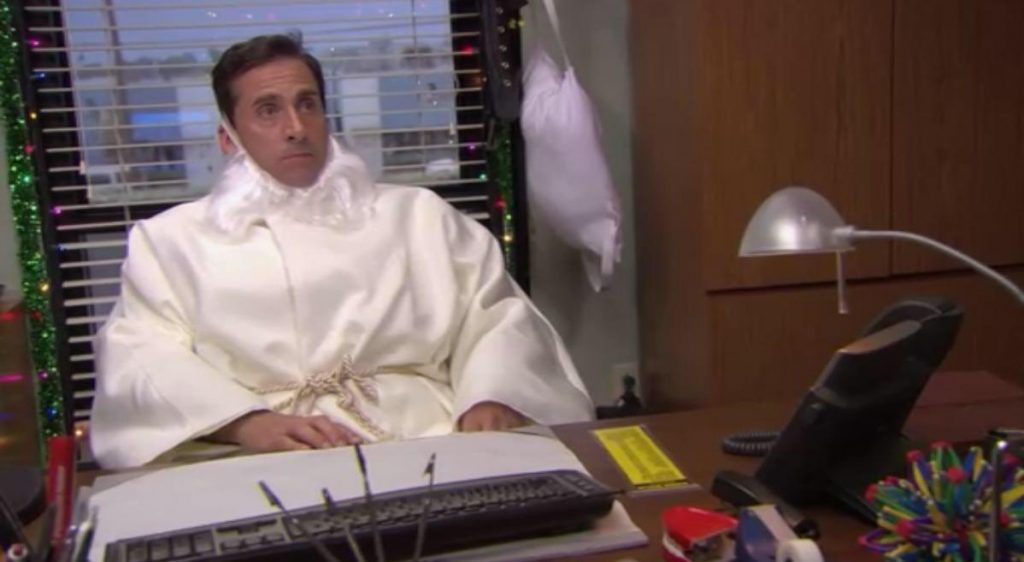
If Shakespeare is the king of metaphors, Michael Scott is the king of malapropisms. A malapropism is when similar-sounding words replace their appropriate counterparts, typically to comic effect — one of the most commonly cited is “dance a flamingo,” rather than a “flamenco.” Malapropisms are often employed in dialogue when a character flubs up their speech.
Example: “I am not to be truffled with.”
Exercise: Choose a famous or common phrase and see if you can replace a word with a similar sounding one that changes the meaning.
13. Onomatopoeia
Amusingly, onomatopoeia (itself a difficult-to-pronounce word) refers to words that sound like the thing they’re referring to. Well-known instances of onomatopoeia include whiz, buzz, snap, grunt, etc.
Example: The excellent children's book Click, Clack, Moo: Cows That Type. “Farmer Brown has a problem. His cows like to type. All day long he hears: Click, clack, moo. Click, clack, moo. Clickety, clack, moo.”
Exercise: Take some time to listen to the sounds around you and write down what you hear. Now try to use those sounds in a short paragraph or story.
14. Oxymoron
An oxymoron comes from two contradictory words that describe one thing. While juxtaposition contrasts two story elements, oxymorons are about the actual words you are using.
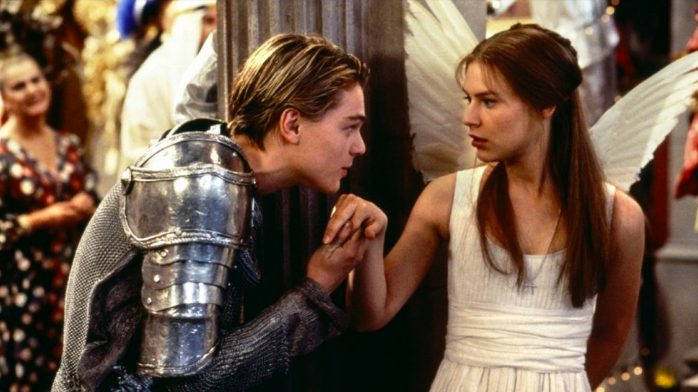
Example: "Parting is such sweet sorrow.” — Romeo and Juliet by William Shakespeare. (Find 100 more examples of oxymorons here.)
Similar terms: juxtaposition, paradox
Exercise: Choose two words with opposite meanings and see if you can use them in a sentence to create a coherent oxymoron.
15. Parallelism
Parallelism is all about your sentence structure. It’s when similar ideas, sounds, phrases, or words are arranged in a way that is harmonious or creates a parallel, hence the name. It can add rhythm and meter to any piece of writing and can often be found in poetry.
Example: “That’s one small step for man, one giant leap for mankind.” — Neil Armstrong
🖊️
Which famous author do you write like?
Find out which literary luminary is your stylistic soulmate. Takes one minute!
16. Polysyndeton
Instead of using a single conjunction in lengthy statements, polysyndeton uses several in succession for a dramatic effect. This one is definitely for authors looking to add a bit of artistic flair to their writing, or who are hoping to portray a particular (usually naïve) sort of voice.
Example: “Luster came away from the flower tree and we went along the fence and they stopped and we stopped and I looked through the fence while Luster was hunting in the grass.” — The Sound and the Fury by William Faulkner
Exercise: Write three or four independent sentences. Try combining them using conjunctions. What kind of effect does this have on the overall meaning and tone of the piece?
17. Portmanteau
A portmanteau is when two words are combined to form a new word which refers to a single concept that retains the meanings of both the original words. Modern language is full of portmanteaus. In fact, the portmanteau is itself a portmanteau. It’s a combination of the French porter (to carry) and manteau (cloak).
Example: Brunch (breakfast and lunch); cosplay (costume and roleplay); listicle (list and article); romcom (romance and comedy)
Exercise: Pick two words that are often used together to describe a single concept. See if there’s a way to combine them and create a single word that encompasses the meaning of both.
18. Repetition
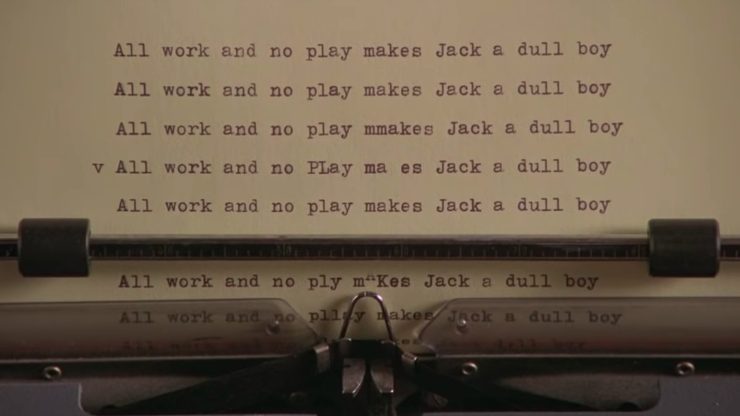
Repetition, repetition, repetition… where would we be without it? Though too much repetition is rarely a good thing, occasional repetition can be used quite effectively to drill home a point, or to create a certain atmosphere. For example, horror writers often use repetition to make the reader feel trapped and scared.
Example: In The Shining, Jack Torrance types over and over again on his pages, “All work and no play makes Jack a dull boy.” In this case, obsessive repetition demonstrates the character’s unraveling mind.
Similar term: anaphora
Exercise: Repetition can be used to call attention to an idea or phrase. Pick an idea you want to emphasize and write a few sentences about it. Are there any places where you can add repetition to make it more impactful?
19. Tautology
A tautology is when a sentence or short paragraph repeats a word or phrase, expressing the same idea twice. Often, this is a sign that you should trim your work to remove the redundancy (such as “frozen ice”) but can also be used for poetic emphasis.
Example: "But the fact is I was napping, and so gently you came rapping, And so faintly you came tapping, tapping at my chamber door" – “The Raven” by Edgar Allan Poe
20. Tmesis
Tmesis is when a word or phrase is broken up by an interjecting word, such as abso-freaking-lutely. It’s used to draw out and emphasize the idea, often with a humorous or sarcastic slant.
Example: "This is not Romeo, he's some-other-where." – Romeo and Juliet by William Shakespeare
21. Allegory
An allegory is a type of narrative that uses characters and plot to depict abstract ideas and themes. In an allegorical story, things represent more than they appear to on the surface. Many children's fables, such as The Tortoise and the Hare, are simple allegories about morality — but allegories can also be dark, complex, and controversial.
Example: Animal Farm by George Orwell. This dystopian novella is one of modern literature’s best-known allegories. A commentary on the events leading up to Stalin's rise and the formation of the Soviet Union, the pigs at the heart of the novel represent figures such as Stalin, Trotsky, and Molotov.
Exercise: Pick a major trend or problem in the world and consider what defines it. Try and create a story where that trend plays out on a smaller scale.
22. Anecdote
An anecdote is like a short story within a story. Sometimes, they are incredibly short—only a line or two—and their purpose is to add a character’s perspective, knowledge, or experience to a situation. They can be inspirational, humorous, or be used to inspire actions in others. Since anecdotes are so short, don’t expect them to be part of a main story. They’re usually told by a character and part of the dialogue.
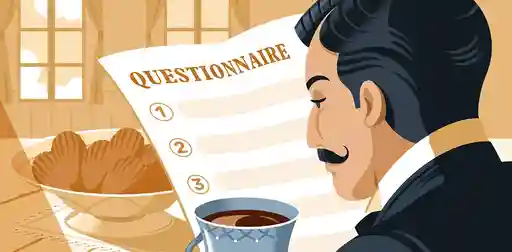
Example: Marcel Proust’s Swann’s Way, part of his series of novels, In Search of Lost Time, deals with the themes of remembrance and memory. In one section of this book, to illustrate these ideas, the main character recalls an important memory of eating a madeleine cookie. “Many years had elapsed during which nothing of Combray, save what was comprised in the theatre and the drama of my going to bed there, had any existence for me, when one day in winter, as I came home, my mother, seeing that I was cold, offered me some tea, a thing I did not ordinarily take. I declined at first, and then, for no particular reason, changed my mind. She sent out for one of those short, plump little cakes called ‘petites madeleines,’ which look as though they had been moulded in the fluted scallop of a pilgrim’s shell.”
23. Deus Ex Machina
Literally meaning “god in the machine” in Greek, deus ex machina is a plot device where an impossible situation is solved by the appearance of an unexpected or unheard of character, action, object, or event. This brings about a quick and usually happy resolution for a story and can be used to surprise an audience, provide comic relief, or provide a fix for a complicated plot. However, deus ex machinas aren’t always looked upon favorably and can sometimes be seen as lazy writing, so they should be used sparingly and with great thought.
Example: William Golding’s famous novel of a group of British boys marooned on a desert island is resolved with a deus ex machina. At the climax of The Lord of the Flies, just as Ralph is about to be killed by Jack, a naval officer arrives to rescue the boys and bring them back to civilization. It’s an altogether unexpected and bloodless ending for a story about the boys’ descent into savagery.
Exercise: Consider the ending of your favorite book or movie and then write an alternate ending that uses a deus ex machina to resolve the main conflict. How does this affect the overall story in terms of theme and tone?
If you struggle to write consistently, sign up for our How to Write a Novel course to finish a novel in just 3 months.
NEW REEDSY COURSE
How to Write a Novel
Enroll in our course and become an author in three months.
24. Dramatic irony
Dramatic irony is when the readers know more about the situation going on than at least one of the characters involved. This creates a difference between the ways the audience and the characters perceive unfolding events. For instance, if we know that one character is having an affair, when that character speaks to their spouse, we will pick up on the lies and double-meanings of their words, while the spouse may take them at face value.
Example: In Titanic, the audience knows from the beginning of the movie that the boat will sink. This creates wry humor when characters remark on the safety of the ship.
25. Exposition
Exposition is when the narrative provides background information in order to help the reader understand what’s going on. When used in conjunction with description and dialogue, this literary device provides a richer understanding of the characters, setting, and events. Be careful, though — too much exposition will quickly become boring, thus undercutting the emotional impact of your work.
Example: “The Dursley’s had everything they wanted, but they also had a secret, and their greatest fear was that somebody would discover it.” – Harry Potter and the Sorcerer’s Stone by J.K. Rowling
Exercise: Pick your favorite story and write a short paragraph introducing it to someone who knows nothing about it.
26. Flashback
Flashbacks to previous events split up present-day scenes in a story, usually to build suspense toward a big reveal. Flashbacks are also an interesting way to present exposition for your story, gradually revealing to the reader what happened in the past.
Example: Every other chapter in the first part of Gone Girl is a flashback, with Amy’s old diary entries describing her relationship with her husband before she disappeared.
Similar term: foreshadowing
27. Foreshadowing
Foreshadowing is when the author hints at events yet to come in a story. Similar to flashbacks (and often used in conjunction with them), this technique is also used to create tension or suspense — giving readers just enough breadcrumbs to keep them hungry for more.
Example: One popular method of foreshadowing is through partial reveals — the narrator leaves out key facts to prompt readers’ curiosity. Jeffrey Eugenides does this in The Virgin Suicides: “On the morning the last Lisbon daughter took her turn at suicide — it was Mary this time, and sleeping pills, like Therese, the two paramedics arrived at the house knowing exactly where the knife drawer was, and the gas oven, and the beam in the basement from which it was possible to tie a rope.”
Similar term: flashback
Exercise: Go back to your favorite book or movie. Can you identify any instances of foreshadowing in the early portions of the story for events that happen in the future?
28. Frame story
A frame story is any part of the story that "frames" another part of it, such as one character telling another about their past, or someone uncovering a diary or a series of news articles that then tell the readers what happened. Since the frame story supports the rest of the plot, it is mainly used at the beginning and the end of the narrative, or in small interludes between chapters or short stories.
Example: In The Name of the Wind by Patrick Rothfuss, Kvothe is telling Chronicler the story of his life over the span of three days. Most of the novel is the story he is telling, while the frame is any part that takes place in the inn.
29. In Medias Res
In medias res is a Latin term that means "in the midst of things" and is a way of starting a narrative without exposition or contextual information. It launches straight into a scene or action that is already unfolding.
Example: “Many years later, as he faced the firing squad, Colonel Aureliano Buendía was to remember that distant afternoon when his father took him to discover ice.” — The opening line of One Hundred Years of Solitude by Gabriel García Márquez
Exercise: Pick a story you enjoy and rewrite the opening scene so that it starts in the middle of the story.
30. Point of view
Point of view is, of course, the mode of narration in a story. There are many POVs an author can choose, and each one will have a different impact on the reading experience.
Example: Second person POV is uncommon because it directly addresses the reader — not an easy narrative style to pull off. One popular novel that manages to employ this perspective successfully is Bright Lights, Big City by Jay McInerney: “You are not the kind of guy who would be at a place like this at this time of the morning. But here you are, and you cannot say that the terrain is entirely unfamiliar, although the details are fuzzy.”
Exercise: Write a short passage in either first, second, or third person. Then rewrite that passage in the other two points of view, only changing the pronouns. How does the change in POV affect the tone and feel of the story?
FREE COURSE
Understanding Point of View
Learn to master different POVs and choose the best for your story.
31. Soliloquy
Soliloquy involves a character speaking their thoughts aloud, usually at length (and often in a Shakespeare play). The character in question may be alone or in the company of others, but they’re not speaking for the benefit of other people; the purpose of a soliloquy is for a character to reflect independently.
Example: Hamlet’s “to be or not to be” speech, in which he ruminates on the nature of life and death, is a classic dramatic soliloquy.
Exercise: Pick a character from your favorite book or movie and write a soliloquy from their point of view where they consider their thoughts and feelings on an important part of their story or character arc.
🖋️
Which writing app is right for you?
Find out here! Takes 30 seconds
32. Tone
Tone refers to the overall mood and message of your book. It’s established through a variety of means, including voice, characterization, symbolism, and themes. Tone sets the feelings you want your readers to take away from the story.
Example: No matter how serious things get in The Good Place, there is always a chance for a character to redeem themselves by improving their behavior. The tone remains hopeful for the future of humanity in the face of overwhelming odds.
Exercise: Write a short paragraph in an upbeat tone. Now using the same situation you came up with, rewrite that passage in a darker or sadder tone.
33. Tragicomedy
Tragicomedy is just what it sounds like: a blend of tragedy and comedy. Tragicomedy helps an audience process darker themes by allowing them to laugh at the situation even when circumstances are bleak.
Example: Lemony Snicket’s A Series of Unfortunate Events uses wordplay, absurd situations, and over-the-top characters to provide humor in an otherwise tragic story.
34. Allusion
An allusion is a reference to a person, place, thing, concept, or other literary work that a reader is likely to recognize. A lot of meaning can be packed into an allusion and it’s often used to add depth to a story. Many works of classic Western literature will use allusions to the Bible to expand on or criticize the morals of their time.
Example: “The two knitting women increase his anxiety by gazing at him and all the other sailors with knowing unconcern. Their eerie looks suggest that they know what will happen (the men dying), yet don’t care.” The two women knitting in this passage from Joseph Conrad’s Heart of Darkness are a reference to the Fates from Greek mythology, who decide the fate of humanity by spinning and cutting the threads of life.
Exercise: In a relatively simple piece of writing, see how many times you can use allusions. Go completely crazy. Once you’re finished, try to cut it down to a more reasonable amount and watch for how it creates deeper meaning in your piece.
35. Analogy
An analogy connects two seemingly unrelated concepts to show their similarities and expand on a thought or idea. They are similar to metaphors and similes, but usually take the comparison much further than either of these literary devices as they are used to support a claim rather than provide imagery.
Example: “It has been well said that an author who expects results from a first novel is in a position similar to that of a man who drops a rose petal down the Grand Canyon of Arizona and listens for the echo.” — P.G. Wodehouse
Exercise: Pick two seemingly unrelated nouns and try to connect them with a verb to create an analogy.
36. Anthropomorphism
To anthropomorphize is to apply human traits or qualities to a non-human thing such as objects, animals, or the weather. But unlike personification, in which this is done through figurative description, anthropomorphism is literal: a sun with a smiling face, for example, or talking dogs in a cartoon.
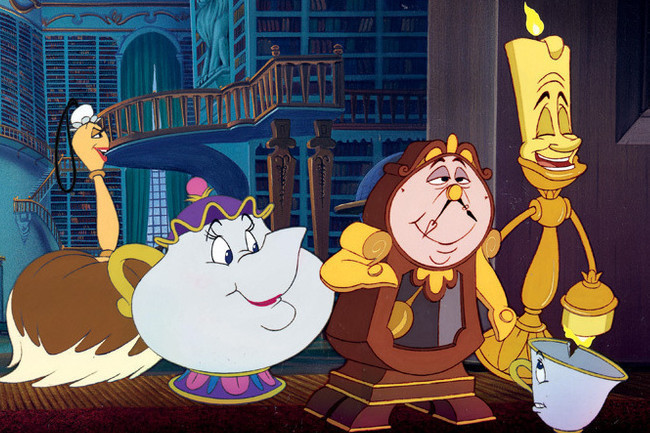
Examples: In Disney’s Beauty and the Beast, Mrs. Potts the teapot, Cogsworth the clock, and Lumière the candlestick are all household objects that act and behave like humans (which, of course, they were when they weren’t under a spell).
Similar term: personification
Exercise: Pick a non-human object and describe it as if it was human, literally ascribing human thoughts, feelings, and senses to it.
37. Aphorism
An aphorism is a universally accepted truth stated in a concise, to-the-point way. Aphorisms are typically witty and memorable, often becoming adages or proverbs as people repeat them over and over.
Example: “To err is human, to forgive divine.” — Alexander Pope
38. Archetype
An archetype is a “universal symbol” that brings familiarity and context to a story. It can be a character, a setting, a theme, or an action. Archetypes represent feelings and situations that are shared across cultures and time periods, and are therefore instantly recognizable to any audience — for instance, the innocent child character, or the theme of the inevitability of death.
Example: Superman is a heroic archetype: noble, self-sacrificing, and drawn to righting injustice whenever he sees it.
Exercise: Pick an archetype — either a character or a theme — and use it to write a short piece centered around that idea.
39. Cliché
A cliché is a saying or idea that is used so often it becomes seen as unoriginal. These phrases might become so universal that, despite their once intriguing nature, they're now looked down upon as uninteresting and overused.
Examples: Some common cliches you might have encountered are phrases like “easy as pie” and “light as a feather.” Some lines from famous books and movies have become so popular that they are now in and of themselves cliches such as Darth Vader’s stunning revelation from The Empire Strikes Back, “Luke, I am your father.” Also, many classic lines of Shakespeare are now considered cliches like, “All that glitters is not gold” from The Merchant of Venice.
Exercise: Write a short passage using as many cliches as possible. Now try to cut them out and replace them with more original phrasing. See how the two passages compare.
40. Colloquialism
Colloquialism is the use of casual and informal language in writing, which can also include slang. Writers use colloquialisms to provide context to settings and characters, and to make their writing sound more authentic. Imagine reading a YA novel that takes place in modern America, and the characters speak to each other like this:
“Good morning, Sue. I hope that you slept well and are prepared for this morning’s science exam.”
It’s not realistic. Colloquialisms help create believable dialogue:
“Hey Sue, what’d you get up to last night? This science test is gonna suck.”
Example: Trainspotting by Irvine Welsh takes place in Scotland, a fact made undeniably obvious by the dialect: “Thing is, as ye git aulder, this character-deficiency gig becomes mair sapping. Thir wis a time ah used tae say tae aw the teachers, bosses, dole punters, poll-tax guys, magistrates, when they telt me ah was deficient: ’Hi, cool it, gadge, ah’m jist me, jist intae a different sort ay gig fae youse but, ken?’”
Exercise: Write a dialogue between two characters as formally as possible. Now take that conversation and make it more colloquial. Imagine that you’re having this conversation with a friend. Mimic your own speech patterns as you write.
41. Euphemism
A euphemism is an indirect, “polite” way of describing something too inappropriate or awkward to address directly. However, most people will still understand the truth about what's happening.
Example: When an elderly person is forced to retire, some might say they’re being “put out to pasture.”
Exercise: Write a paragraph where you say things very directly. Now rewrite that paragraph using only euphemisms.
42. Hyperbole
Hyperbole is an exaggerated statement that emphasizes the significance of the statement’s actual meaning. When a friend says, "Oh my god, I haven't seen you in a million years," that's hyperbole.
Example: “At that time Bogotá was a remote, lugubrious city where an insomniac rain had been falling since the beginning of the 16th century.” — Living to Tell the Tale by Gabriel García Márquez
Exercise: Tall tales often make use of hyperbole to tell an exaggerated story. Use hyperbole to relate a completely mundane event or experience to turn it into a tall tale.
43. Hypophora
Hypophora is much like a rhetorical question, wherein someone asks a question that doesn't require an answer. However, in hypophora, the person raises a question and answers it immediately themselves (hence the prefix hypo, meaning 'under' or 'before'). It’s often used when characters are reasoning something aloud.
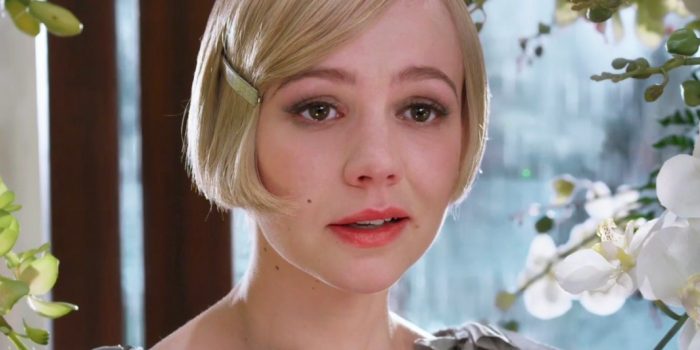
Example: “Do you always watch for the longest day of the year and then miss it? I always watch for the longest day in the year and then miss it.” — Daisy in The Great Gatsby by F. Scott Fitzgerald
44. Idiom
An idiom is a saying that uses figurative language whose meaning differs from what it literally says. These phrases originate from common cultural experiences, even if that experience has long ago been forgotten. Without cultural context, idioms don’t often make sense and can be the toughest part for non-native speakers to understand.
Example: In everyday use, idioms are fairly common. We say things like, “It’s raining cats and dogs” to say that it’s downpouring.
Exercise: Idioms are often used in dialogue. Write a conversation between two people where idioms are used to express their main points.
45. Imagery
Imagery appeals to readers’ senses through highly descriptive language. It’s crucial for any writer hoping to follow the rule of "show, don’t tell," as strong imagery truly paints a picture of the scene at hand.
Example: “In the hard-packed dirt of the midway, after the glaring lights are out and the people have gone to bed, you will find a veritable treasure of popcorn fragments, frozen custard dribblings, candied apples abandoned by tired children, sugar fluff crystals, salted almonds, popsicles, partially gnawed ice cream cones and wooden sticks of lollipops.” — Charlotte's Web by E.B. White
Exercise: Choose an object, image, or idea and use the five senses to describe it.
FREE COURSE
Show, Don't Tell
Master the golden rule of writing in 10 five-minute lessons.
46. Irony
Irony creates a contrast between how things seem and how they really are. There are three types of literary irony: dramatic (when readers know what will happen before characters do), situational (when readers expect a certain outcome, only to be surprised by a turn of events), and verbal (when the intended meaning of a statement is the opposite of what was said).
Example: This opening scene from Orson Welles’ A Touch of Evil is a great example of how dramatic irony can create tension.
47. Juxtaposition
Juxtaposition places two or more dissimilar characters, themes, concepts, etc. side by side, and the profound contrast highlights their differences. Why is juxtaposition such an effective literary device? Well, because sometimes the best way for us to understand something is by understanding what it’s not.
Example: In the opening lines of A Tale of Two Cities, Charles Dickens uses juxtaposition to emphasize the societal disparity that led to the French Revolution: “It was the best of times, it was the worst of times, it was the age of wisdom, it was the age of foolishness, it was the epoch of belief, it was the epoch of incredulity, it was the season of Light, it was the season of Darkness…”
Similar terms: oxymoron, paradox
Exercise: Pick two ideas, objects, places, or people that seem like complete opposites. Introduce them side by side in the beginning of your piece and highlight their similarities and differences throughout.
48. Metaphor
A metaphor compares two similar things by saying that one of them is the other. As you'd likely expect, when it comes to literary devices, this one is a heavy hitter. And if a standard metaphor doesn't do the trick, a writer can always try an extended metaphor: a metaphor that expands on the initial comparison through more elaborate parallels.
Example: Metaphors are literature’s bread and butter (metaphor intended) — good luck finding a novel that is free of them. Here’s one from Frances Hardinge’s A Face Like Glass: “Wishes are thorns, he told himself sharply. They do us no good, just stick into our skin and hurt us.”
Similar term: simile
Exercise: Write two lists: one with tangible objects and the other concepts. Mixing and matching, try to create metaphors where you describe the concepts using physical objects.
One metaphor example not enough? Check out this post, which has 97 of ‘em!
49. Metonymy
Metonymy is like symbolism, but even more so. A metonym doesn’t just symbolize something else, it comes to serve as a synonym for that thing or things — typically, a single object embodies an entire institution.
Examples: “The crown” representing the monarchy, “Washington” representing the U.S. government.
Similar term: synecdoche
Exercise: Create a list of ten common metonymies you might encounter in everyday life and speech.
50. Motif
Whatever form a motif takes, it recurs throughout the novel and helps develop the theme of the narrative. This might be a symbol, concept, or image.
Example: In Anna Karenina by Leo Tolstoy, trains are an omnipresent motif that symbolize transition, derailment, and ultimately violent death and destruction.
Similar term: symbol
Exercise: Pick a famous book or movie and see if you can identify any common motifs within it.
51. Non sequitur
Non sequiturs are statements that don't logically follow what precedes them. They’ll often be quite absurd and can lend humor to a story. But they’re just not good for making jokes. They can highlight missing information or a miscommunication between characters and even be used for dramatic effect.
Example: “It was a spring day, the sort that gives people hope: all soft winds and delicate smells of warm earth. Suicide weather.” — Girl, Interrupted by Susanna Kaysen
Exercise: Write a conversation that gets entirely derailed by seemingly unrelated non sequiturs.
52. Paradox
Paradox derives from the Greek word paradoxon, which means “beyond belief.” It’s a statement that asks people to think outside the box by providing seemingly illogical — and yet actually true — premises.
Example: In George Orwell’s 1984, the slogan of the totalitarian government is built on paradoxes: “War is Peace, Freedom is Slavery, Ignorance is Strength.” While we might read these statements as obviously contradictory, in the context of Orwell’s novel, these blatantly corrupt sentiments have become an accepted truth.
Similar terms: oxymoron, juxtaposition
Exercise: Try writing your own paradox. First, think of two opposing ideas that can be juxtaposed against each other. Then, create a situation where these contradictions coexist with each other. What can you gather from this unique perspective?
53. Personification
Personification uses human traits to describe non-human things. Again, while the aforementioned anthropomorphism actually applies these traits to non-human things, personification means the behavior of the thing does not actually change. It's personhood in figurative language only.
Example: “Just before it was dark, as they passed a great island of Sargasso weed that heaved and swung in the light sea as though the ocean were making love with something under a yellow blanket, his small line was taken by a dolphin.” — The Old Man and the Sea by Ernest Hemingway
Similar term: anthropomorphism
Exercise: Pick a non-human object and describe it using human traits, this time using similes and metaphors rather than directly ascribing human traits to it.
54. Rhetorical question
A rhetorical question is asked to create an effect rather than to solicit an answer from the listener or reader. Often it has an obvious answer and the point of asking is to create emphasis. It’s a great way to get an audience to consider the topic at hand and make a statement.
Example: “If you prick us, do we not bleed? If you tickle us, do we not laugh? If you poison us, do we not die? And if you wrong us, shall we not revenge?” — The Merchant of Venice by William Shakespeare
55. Satire
Writers use satire to make fun of some aspect of human nature or society — usually through exaggeration, ridicule, or irony. There are countless ways to satirize something; most of the time, you know it when you read it.
Example: The famous adventure novel Gulliver’s Travels by Jonathan Swift is a classic example of satire, poking fun at “travelers' tales,” the government, and indeed human nature itself.
56. Simile
A simile draws resemblance between two things by saying “Thing A is like Thing B,” or “Thing A is as [adjective] as Thing B.” Unlike a metaphor, a similar does not posit that these things are the same, only that they are alike. As a result, it is probably the most common literary device in writing — you can almost always recognize a simile through the use of “like” or “as.”
Example: There are two similes in this description from Circe by Madeline Miller: “The ships were golden and huge as leviathans, their rails carved from ivory and horn. They were towed by grinning dolphins or else crewed by fifty black-haired nereids, faces silver as moonlight.”
Similar term: metaphor
57. Symbolism
Authors turn to tangible symbols to represent abstract concepts and ideas in their stories Symbols typically derive from objects or non-humans — for instance, a dove might represent peace, or a raven might represent death.
Example: In The Great Gatsby, Fitzgerald uses the eyes of Doctor T.J. Eckleburg (actually a faded optometrist's billboard) to represent God and his judgment of the Jazz Age.
Similar term: motif
Exercise: Choose an object that you want to represent something — like an idea or concept. Now, write a poem or short story centered around that symbol.
58. Synecdoche
Synecdoche is the usage of a part to represent the whole. That is, rather than an object or title that’s merely associated with the larger concept (as in metonymy), synecdoche must actually be attached in some way: either to the name, or to the larger whole itself.
Examples: “Stanford won the game” (Stanford referring to the full title of the Stanford football team) or “Nice wheels you got there” (wheels referring to the entire car)
Similar term: metonymy
59. Zeugma
Zeugma is when one word is used to ascribe two separate meanings to two other words. This literary device is great for adding humor and figurative flair as it tends to surprise the reader. And it’s just a fun type of wordplay.
Example: “Yet time and her aunt moved slowly — and her patience and her ideas were nearly worn out before the tete-a-tete was over.” — Pride and Prejudice by Jane Austen
60. Zoomorphism
Zoomorphism is when you take animal traits and assign them to anything that’s not an animal. It’s the opposite of anthropomorphism and personification, and can be either a physical manifestation, such as a god appearing as an animal, or a comparison, like calling someone a busy bee.
Example: When vampires turn into bats, their bat form is an instance of zoomorphism.
Exercise: Describe a human or object by using traits that are usually associated with animals.
Similar terms: anthropomorphism, personification
Readers and writers alike can get a lot out of understanding literary devices and how they're used. Readers can use them to gain insight into the author’s intended meaning behind their work, while writers can use literary devices to better connect with readers. But whatever your motivation for learning them, you certainly won't be sorry you did! (Not least because you'll recognize the device I just used in that sentence 😉)



6 responses
Ron B. Saunders says:
16/01/2019 – 19:26
Paraprosdokians are also delightful literary devices for creating surprise or intrigue. They cause a reader to rethink a concept or traditional expectation. (https://en.wikipedia.org/wiki/Paraprosdokian)
ManhattanMinx says:
17/01/2019 – 02:07
That's pore, not pour. Shame.....
↪️ Coline Harmon replied:
14/06/2019 – 19:06
It was a Malapropism
↪️ JC JC replied:
23/10/2019 – 00:02
Yeah ManhattanMinx. It's a Malepropism!
↪️ jesus replied:
07/11/2019 – 13:24
no
Susan McGrath says:
10/03/2020 – 10:56
"But whatever your motivation for learning them, you certainly won't be sorry you did! (Not least because you'll recognize the device I just used in that sentence. 😏)" Litote